• MUSIC NOTES, INC. | 404-790-1110

Wake Me, Shake Me

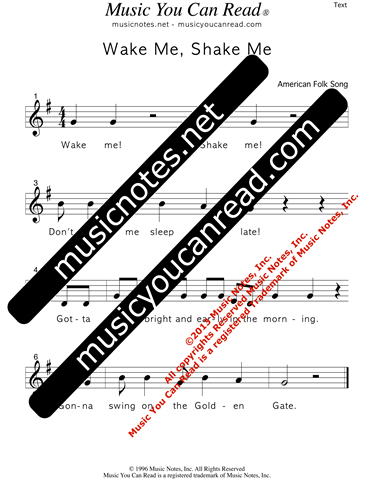
"Wake Me, Shake Me" Lyrics, Text Format

Introducing syncopation.


Description

  • Grade: Kindergarten
  • Origin: USA – Folk Song
  • Key: G Major
  • Time: 4/4
  • Form: ABCD
  • Rhythm: intermediate: | ta ta (ta/a) | ti ta ti ta ta | syncopation, | ta (ta) (ta) ti ti | ta/a (ta/a) |
  • Pitches: intermediate: So La Do Re Mi
  • Intervals: intermediate: Do/Mi, Mi\Do, So/Do, Do\La
  • Musical Elements: notes: half, quarter, eighth; rests: half, quarter, syncopation
  • Key Words: sacred, golden gate, wake, shake, sleep, bright, early, morning, swing; contraction/slang words: gotta (got to), gonna, (going to)


“Wake Me, Shake Me”


Wake me! Shake me!
Don’t let me sleep too late!
Gotta get up bright and early in the morning.
Gonna swing on the Golden Gate.


Additional Formats (click to enlarge)
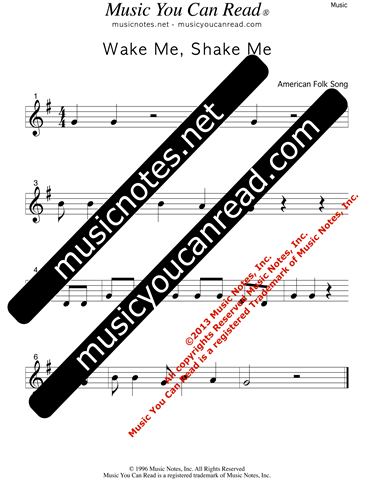
music
"Wake Me, Shake Me" Music Format
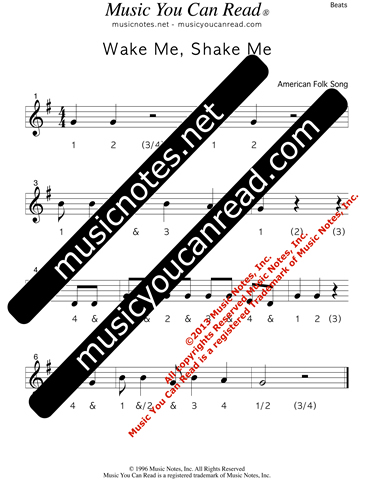
beats
Click to enlarge: "Wake Me, Shake Me" Beats Format
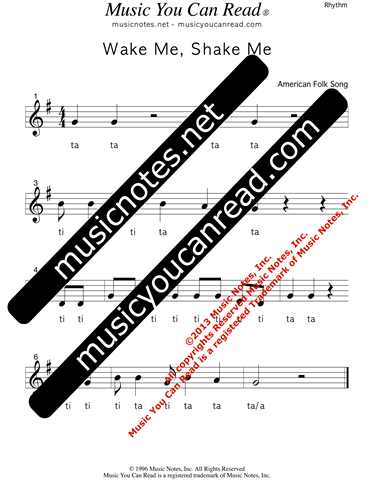
rhythm
Click to Enlarge: "Wake Me, Shake Me" Rhythm Format
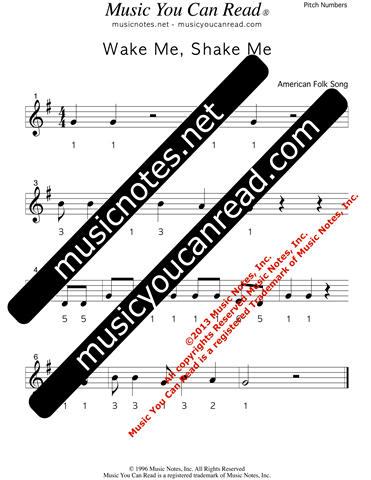
pitch numbers
Click to Enlarge: "Wake Me, Shake Me" Pitch Number Format
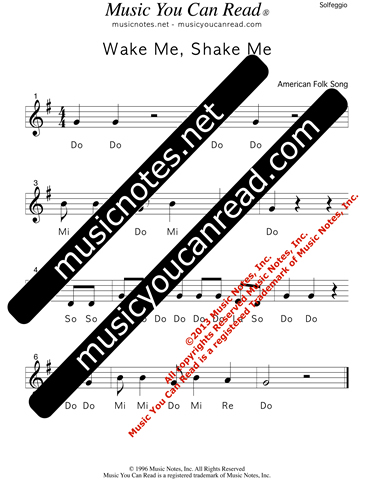
solfeggio
Click to Enlarge: "Wake Me, Shake Me" Solfeggio Format
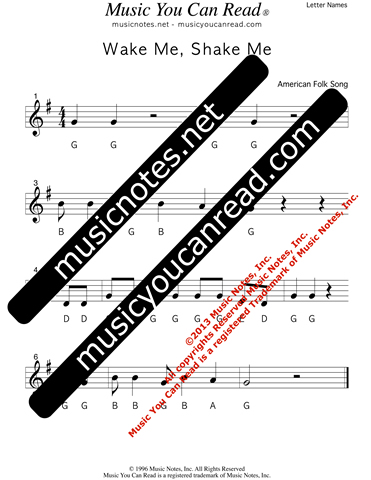
letter names
Click to Enlarge: "Wake Me, Shake Me" Letter Names Format

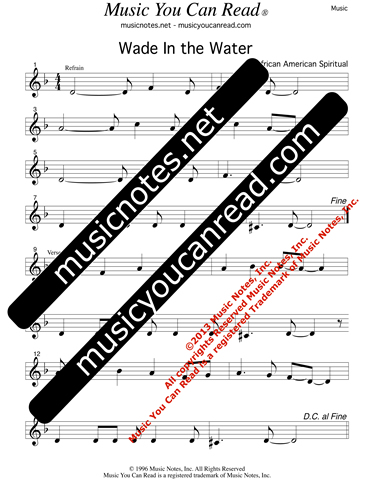
Wade In the Water

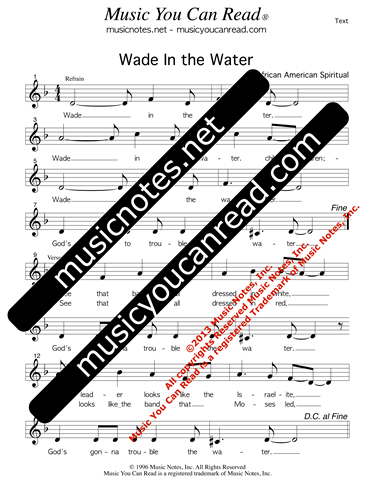
"Wade In the Water," Lyrics, Text Format

Minor tonality pitch in the relative major, intermediate
syncopation and a raised dominant (Si) functioning
as a leading tone to the parallel D Major.


Description

  • Grade: Fifth
  • Origin: USA – African American Spiritual
  • Key: D minor (pitched in F Major)
  • Time: 4/4
  • Form: ABA – refrain/verse/refrain
  • Rhythm: intermediate: | ta/a/ ta ti | syncopation,
    | ta/ ta/a/ | syncopation, | ta ta ti ti ta |
    | ta ti ti ti ta ti | syncopation, | ta ta ta ta |
    | ta ta ti ta/ | syncopation, | ta ti ti ti ta ti | syncopation, | ta/ ta/ (ti) ti | syncopation,
    | ta/ ti ti ta/ | syncopation
  • Pitches: intermediate: Si La Do Re Mi So La – pentatonic scale with a raised dominant Si (functions as a leading tone to the parallel D Major)
  • Intervals: intermediate: La/Do\La (m3), La/Mi (P5), Mi/So\Mi (m3), Mi/La (P4), La\Si/La (m2), Mi\Do (M3)
  • Musical Elements: notes: half, dotted quarter, quarter, eighth;rest: eighth; syncopation, raised/sharp dominant (Si), tied notes, tied rhythms, vocal slurs, D.C. al Fine, Fine, two double barlines, refrain/verse/refrain, minor tonality
  • Key Words: USA history, African American history; world history: Israelites; sacred, spiritual, Bible stories, God, Moses
  • Recorder: advanced: introducing G#, high F, G, and A, syncopation

“Wade In the Water” 

Refrain
Wade in the water.
Wade in the water, children;
Wade in the water.
God’s goin’ to trouble the water.
1. See that band all dressed in white,
God’s gonna trouble the water.
The leader looks like the Israelite,
God’s gonna trouble the water.
Refrain
2.
See the band all dressed in red,
God’s gonna trouble the water.
It looks like the band that Moses led,
God’s gonna trouble the water.
Refrain
Additional Formats (click to enlarge)
music
"Wade In the Water," Music Format
beats
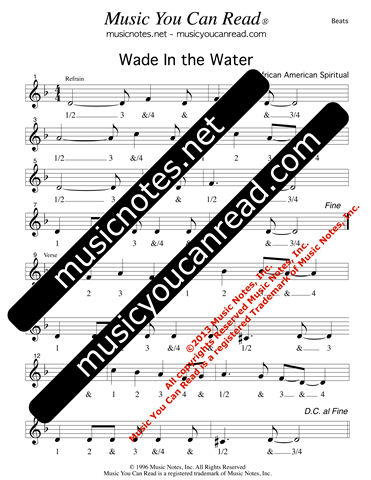
Click to enlarge: "Wade In the Water," Beats Format
rhythm
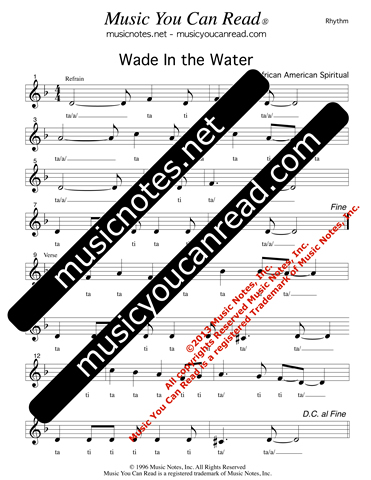
Click to Enlarge: "Wade In the Water," Rhythm Format
pitch numbers
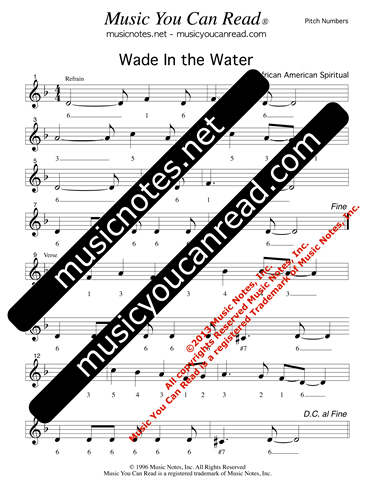
Click to Enlarge: "Wade In the Water," Pitch Number Format
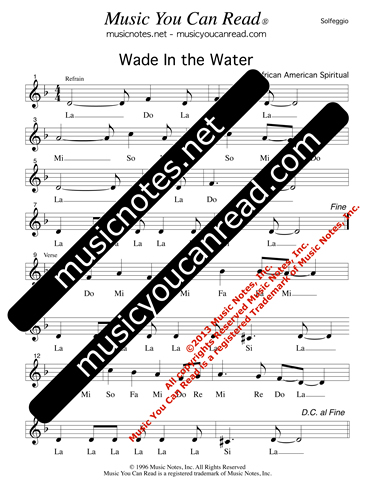
solfeggio
Click to Enlarge: "Wade In the Water," Solfeggio Format
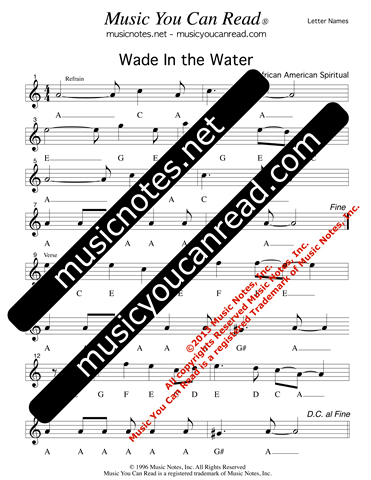
letter names
Click to Enlarge: "" Letter Names Format

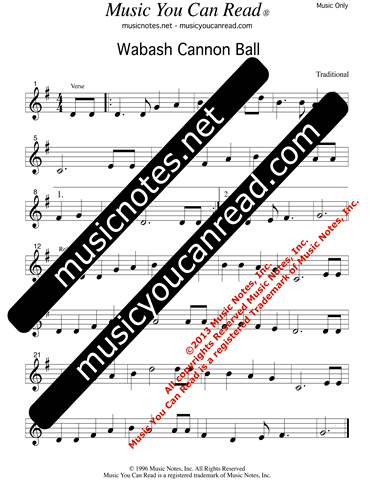
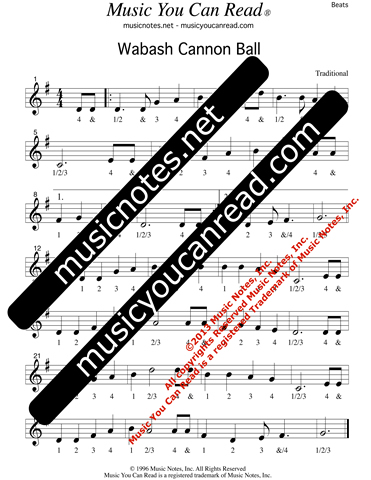
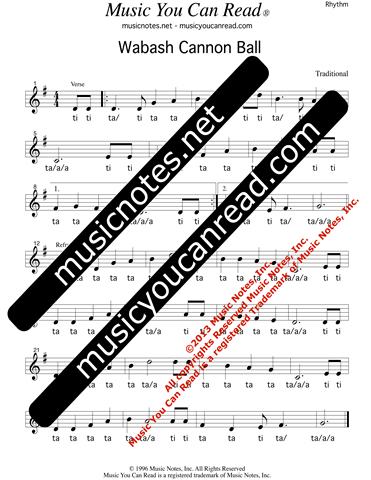
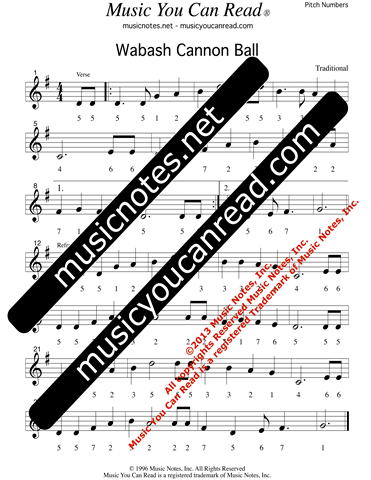
Wabash Cannon Ball

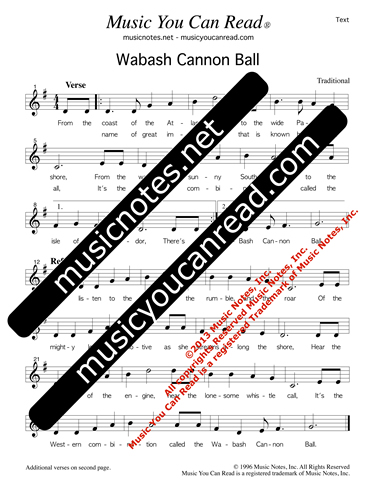
"Wabash Cannon Ball," Lyrics, Text Format

Syncopation and an ascending dominant arpeggio.


Description

  • Grade: Fifth
  • Origin: USA – J. A. Roff – 1882
    (The Great Rock Island Route)
  • Key: G Major
  • Time: 4/4
  • Form: AB – verse/refrain
  • Rhythm: beginners: | ta/ ti ta ta | syncopation,
    | ta ta/a ti ti | ta/a/a ti ti | ta ta ta ta | ta ta ti ta/ |
    syncopation, | ta/a/a ta | ta ta/a ta |
  • Pitches: intermediate: Fa So La Ti Do Re Mi So
  • Intervals: intermediate: So/Do (P4), Mi/So8 (m3), So8\Mi (m3), Do\Fa (P5), So/Ti/Re ascending dominant arpeggio (IV, D), Re\Ti (m3), So/Ti\So (M3), Do\So (P4)
  • Musical Elements: notes: dotted half, half, dotted quarter, quarter, eighth; pickup beat, repeat signs, first and second endings, verse/refrain, syncopation, dominant arpeggio, repeated melodic rhythm patterns, two double barlines
  • Key Words: USA history, USA geography: New York, NY; St. Louis, Missouri; Chicago, Illinois; Minnesota; world oceans: Pacific, Atlantic; world geography: Labrador; fictional railroad, jingle, roar, locomotive, train whistle, thunder, engine, streams along, shore, eastern states, Southlands, western people, rippling waters, Daddy Klaxton, remembered, earthly race, curtain, victory; contractions: we’ll (we will), here’s (here is), it’s (it is) there’s (there is); abbreviation: ’round (around)
  • Recorder: intermediate: introducing high E and high G, dominant arpeggio, syncopation, repeated melodic rhythm patterns

“Wabash Cannon Ball” 

1. From the coast of the Atlantic to the wide Pacific shore,
From he warm and sunny Southland to the isle of Labrador,
There’s a name of great importance that is known by one and all,
It’s the Western combination called the Wabash Cannon Ball.
Refrain:
Just listen to the jingle, the rumble and the roar,
Of the mighty locomotive as she streams along the shore,
Hear the thunder of the engine, hear the lonesome whistle call,
It’s the Western combination called the Wabash Cannon Ball.
2.
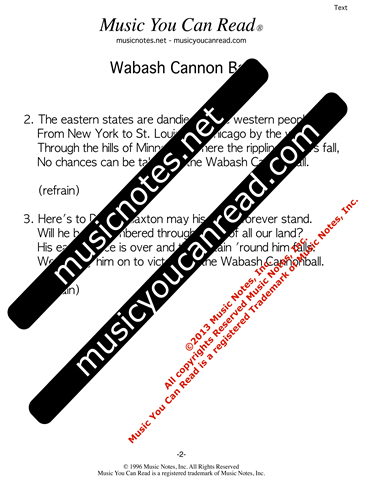
The eastern states are dandies so the western people say,
From New York to St. Louis and Chicago by the way.
Through the hills of Minnesota where the rippling waters fall,
No chances can be taken on the Wabash Cannonball.
Refrain
3. Here’s to Daddy Klaxton may his name forever stand.
Will he be remembered through parts of all our land?
His earthly race is over and the curtain ’round him falls.
We’ll carry him on to victory on the Wabash Cannonball.
Refrain
Additional Formats (click to enlarge)
music
"Wabash Cannon Ball," Music Format
beats
Click to enlarge: "Wabash Cannon Ball," Beats Format
rhythm
Click to Enlarge: "Wabash Cannon Ball," Rhythm Format
pitch numbers
Click to Enlarge: "Wabash Cannon Ball," Pitch Number Format
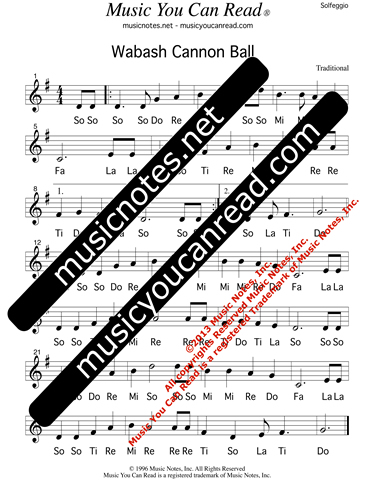
solfeggio
Click to Enlarge: "Wabash Cannon Ball," Solfeggio Format
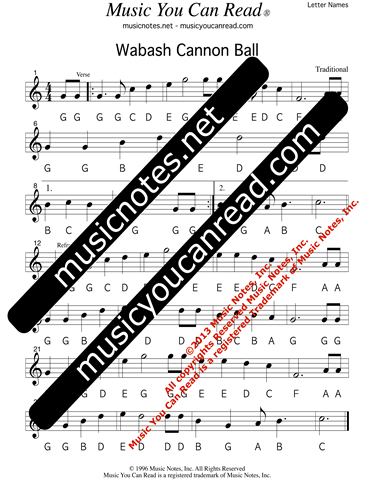
letter names
Click to Enlarge: "" Letter Names Format

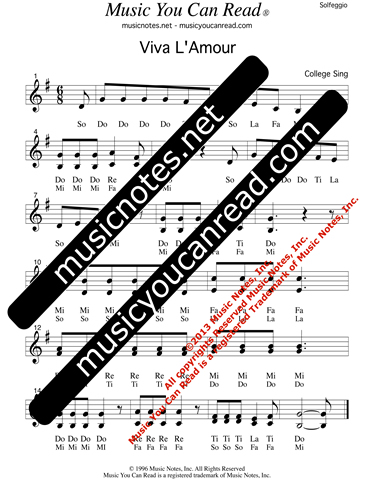
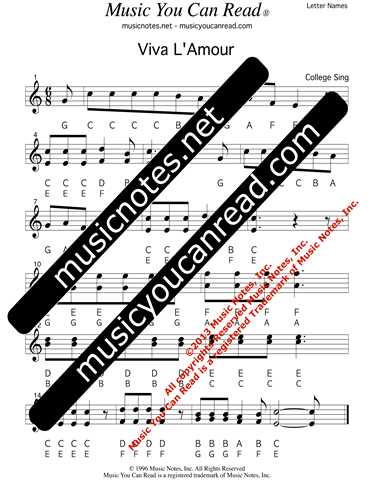
Viva L’Amour

"Viva L'Amour," Lyrics, Text Format

Beginners syncopation, extended range, two part harmony
(6th’s and 3rd’s), feeling duple meter (2) in 6/8.

s.


Description

  • Grade: Fifth
  • Origin: German/English 1818 – USA – 1844
    ( F. D, Benteen – Baltimore, Maryland)
  • Key: G Major
  • Time: 6/8
  • Form: AB – verse/refrain
  • Rhythm: beginners: | ti ti ti ti ti ti | ti ti ti ta (ti) |
    syncopation, | ti ti ti ta ti | syncopation, |
    | ta/ (ta) ti | ti ti ti ta/ | ta/ (ta) (ti) | ta/a/ ti |
  • Pitches: intermediate: Mi Fa So La Ti Do Re Mi Fa
  • Intervals: intermediate: So/Do (P4), La\Fa (M3), Re\Ti (M3), Mi/So (m3), Do/Mi8 (M3), Fa8\Re (m3), Mi8\Do (M3)
  • Musical Elements: notes: half, dotted quarter, quarter, eighth; rest: quarter, eighth; pickup beat, syncopation, verse/refrain, tied notes, two part harmony: major and minor sixths, major and minor thirds, perfect fourth; singing in parts, 6/8 time: eighth note receives one beat, divisions of a dotted quarter note: three eights (3 ti’s), feeling duple meter (2) in 6/8: where three eights would be a triplet if the beat is represented by a dotted quarter
  • Key Words: world geography: England, Germany (each documented as country of origin, 1818), USA geography: first published in 1844 by F. D, Benteen of Baltimore, Maryland; French: viva l’amour (long live love), viva la compagnie (long live the company: army unit); character education, fellow, success, friend, fellowship, wider, circle, expands, comrades, far away lands, banish troubles, occasion, compel, enliven, heart, military song, scout song, camp song, fellowship song; contractions: we’ll (we will), won’t (will not); abbreviation: ev’ry (every)
  • Recorder: advanced: introducing high F,syncopation, playing in two parts, two part harmony: major and minor sixths, major and minor thirds, perfect fourth; singing in parts, 6/8 time: eighth note receives one beat, divisions of a dotted quarter note: three eights (3 ti’s), feeling duple meter (2) in 6/8: where three eights would be a triplet if the beat is represented by a dotted quarter

“Viva L’Amour” 

1. Let ev’ry good fellow now join in a song,
Viva la compagnie!
Success to each other and pass it along,
Viva la compagnie!
Refrain:
Viva la, viva la, viva l’amour,
Viva l’amour, viva l’amour,
Viva la compagnie!
 
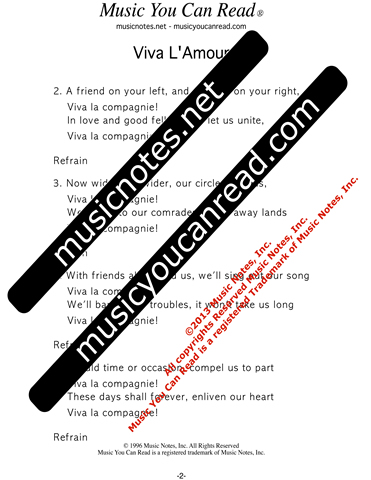
2.
A friend on your left, and a friend on your right,
Viva la compagnie!
In love and good fellowship, let us unite,
Viva la compagnie!
Refrain
3. Now wider and wider, our circle expands,
Viva la compagnie!
We’ll sing to our comrades, in far away lands,
Viva la compagnie!
Refrain
4. With friends all around us, we’ll sing out our song,
Viva la compagnie!
We’ll banish our troubles, it won’t take us long,
Viva la compagnie!
Refrain
5. Should time or occasion, compel us to part,
Viva la compagnie!
These days shall forever, enliven our heart,
Viva la compagnie!
Refrain
Additional Formats (click to enlarge)
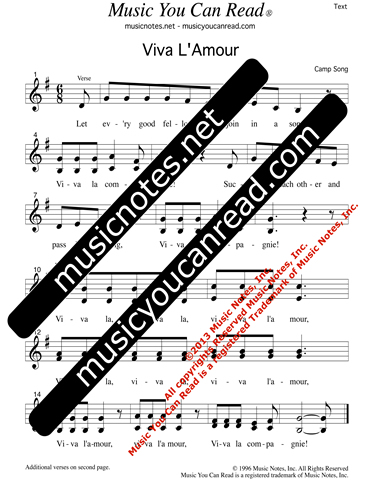
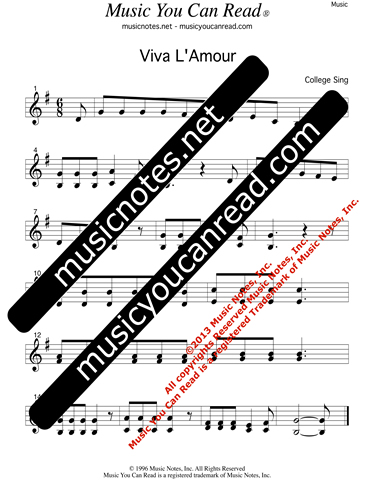
music
"Viva L'Amour," Music Format
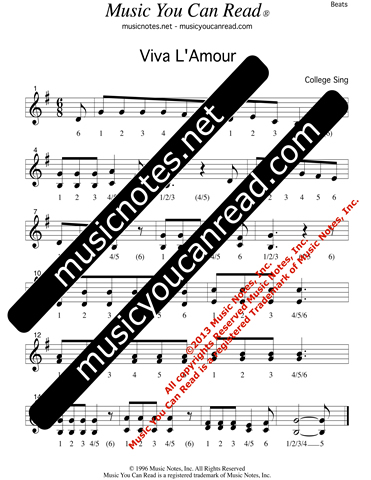
beats
Click to enlarge: "Viva L'Amour," Beats Format
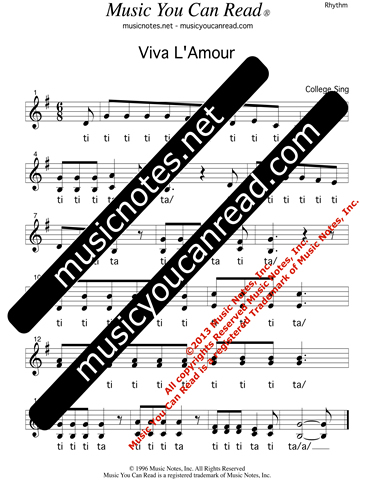
rhythm
Click to Enlarge: "Viva L'Amour," Rhythm Format
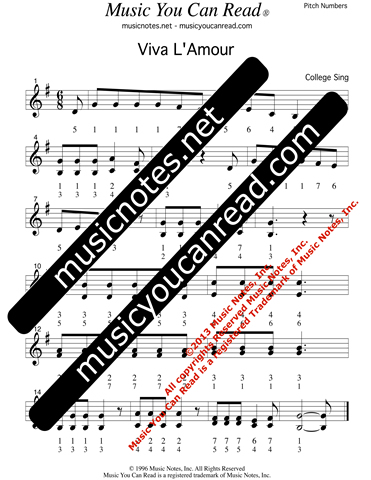
pitch numbers
Click to Enlarge: "Viva L'Amour," Pitch Number Format
solfeggio
Click to Enlarge: "Viva L'Amour," Solfeggio Format
letter names
Click to Enlarge: "" Letter Names Format

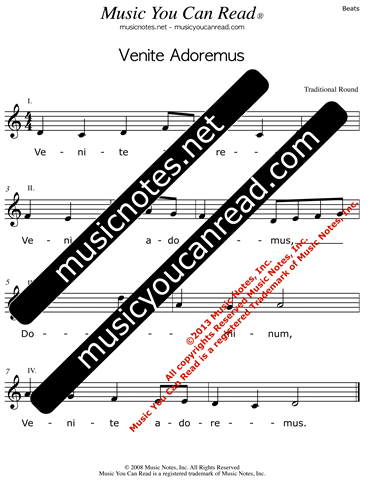
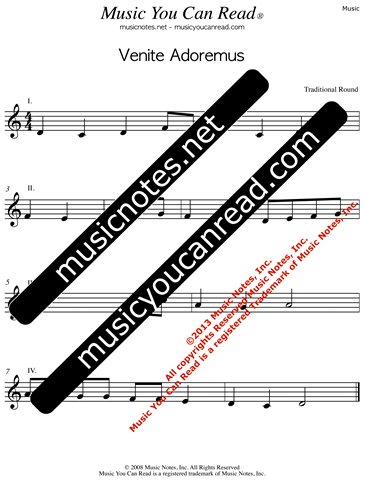
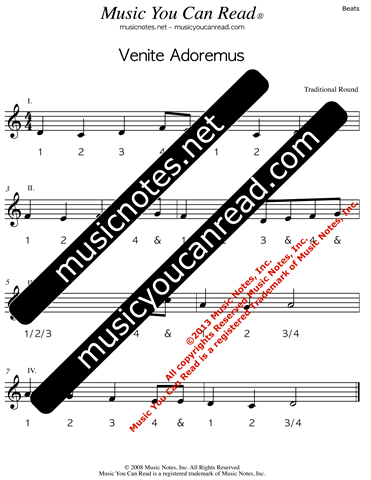
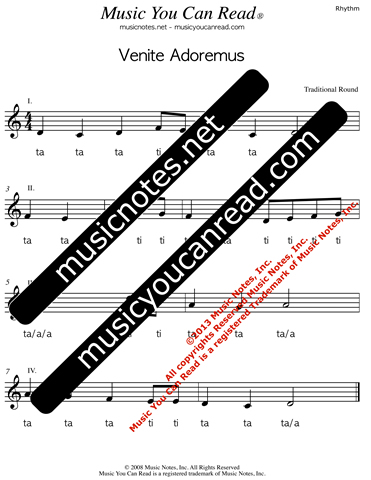
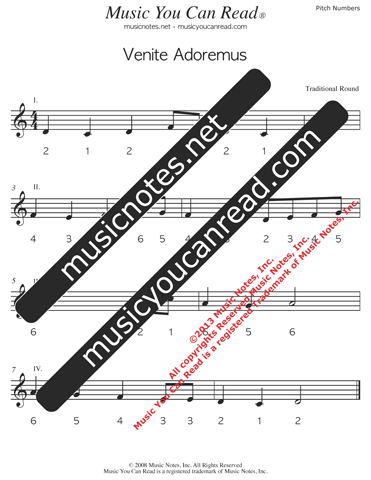
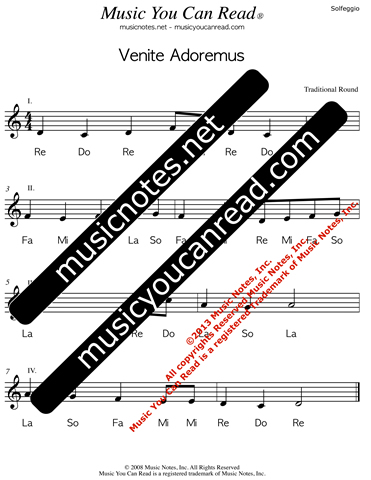
Venite Adoremus

"Venite Adoremus" Lyrics, Text Format

Four part round in the Dorian mode: the tonal
center is the second pitch (2, Re) of the major scale.


Description

  • Grade: Second
  • Origin: Latin Traditional Round
  • Key: Dorian Mode – tonal center: 2, Re
  • Time: 4/4
  • Form: ABCD
  • Rhythm: beginners: | ta ta ta ti ti | syncopation,
    | ta ta ta/a | ta ta ti ti ti ti | syncopation,
    | ta/a/a ti ti | syncopation, | ta ta ta/a |
  • Pitches: intermediate: Do Re Mi Fa So La Do Re
  • Intervals: intermediate: m3’s: Re/Fa, Do\La, P4: La/Re (primary intervals of a minor tonality) Fa/La M3
  • Musical Elements: notes: dotted half, half, quarter, eighth; four part round, Dorian Mode: tonal center is the second (2, Re) of the major scale; syncopation, note: no leading tone
  • Key Words: old world language: Latin: venite, adoremus, dominum; Dorian modality, “Come let us adore Him”, “Christ the Lord”, sacred, Latin Mass, congregational response


“Venite Adoremus”
 

Latin
Venite adoremus,
Venite adoremus,
Dominum,
Venite adoremus.
English
(O) Come let us adore (him),
Christ the Lord,
(O) Come let us adore (him).
Additional Formats (click to enlarge)
music
"Venite Adoremus" Music Format
beats
Click to enlarge: "Venite Adoremus" Beats Format
rhythm
Click to Enlarge: "Venite Adoremus" Rhythm Format
pitch numbers
Click to Enlarge: "Venite Adoremus" Pitch Number Format
solfeggio
Click to Enlarge: "Venite Adoremus" Solfeggio Format
letter names
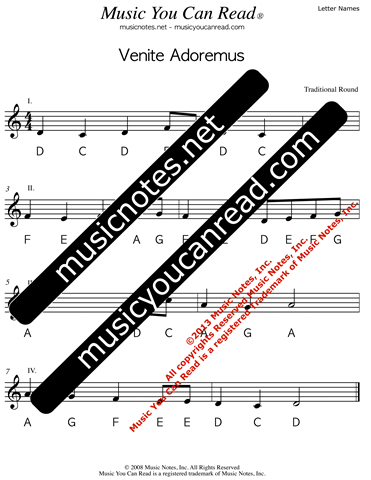
Click to Enlarge: "Venite Adoremus" Letter Names Format

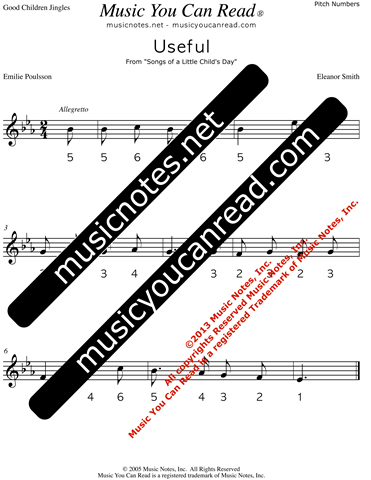
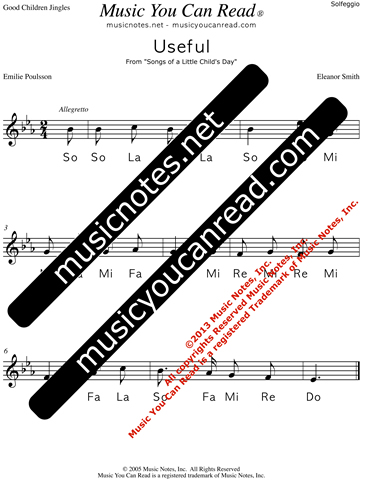
Useful

“Songs of a Little Child’s Day”
At Home

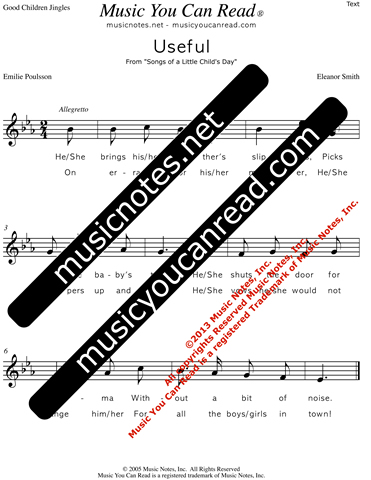
"Useful" Lyrics, Text Format

Introducing dotted quarter and dotted eighth notes.


Description

  • Grade: First
  • Origin: Emilie Poulsson, Eleanor Smith
  • Key: E Flat Major
  • Time: 2/4
  • Form: through composed
  • Rhythm: intermediate: | ti ti ti ti | ta ti ti | ta/ ti |
    | ti/ ri ti ti |
  • Pitches: intermediate: Do Re Mi Fa So La Do – adding Fa to the pentatonic scale
  • Intervals: intermediate: Do/Do8, Do8\Mi, Re/Fa, Fa/La
  • Musical Elements: notes: dotted quarter, quarter, dotted eighth, eighth, sixteenth; through composed, pickup beat, tempo: allegretto/moderately fast (98–109 BPM)
  • Key Words: character education, manners, helping hands, brings, slippers, shuts, grandma, bit, noise, errands, scampers, up, down, vows, town; possessives: father’s, baby’s

“Useful” 

1.
He/She brings his/her father’s slippers,
Picks up the baby’s toys;
He/She shuts the door for Grandma
Without a bit of noise.
2.
On errands for his/her mother,
He/She scampers up and down;
He/She vows he/she would not change him/her
For all the boys/girls in town!
Additional Formats (click to enlarge)
music
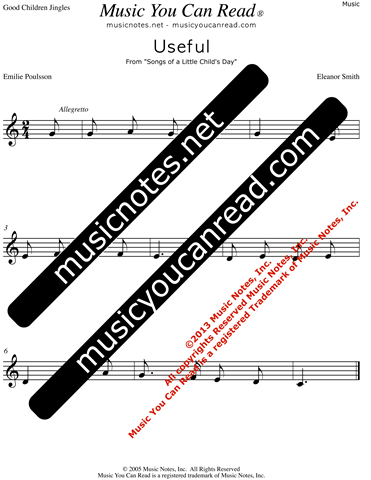
"Useful" Music Format
beats
Click to enlarge: "Useful" Beats Format
rhythm
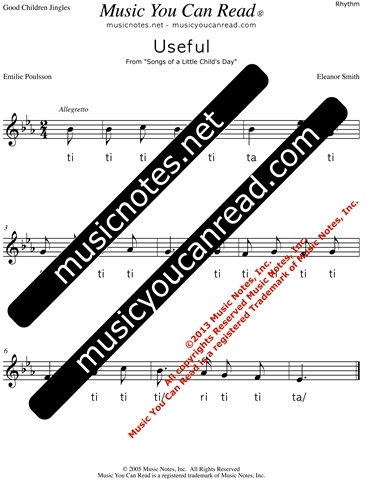
Click to Enlarge: "Useful" Rhythm Format
pitch numbers
Click to Enlarge: "Useful" Pitch Number Format
solfeggio
Click to Enlarge: "Useful" Solfeggio Format
letter names
Click to Enlarge: "Useful" Letter Names Format

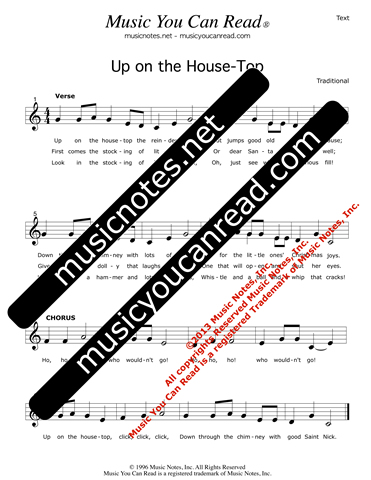
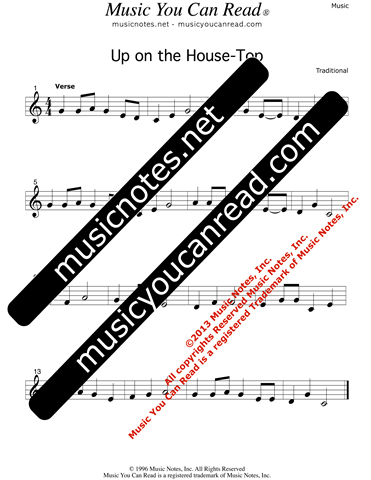
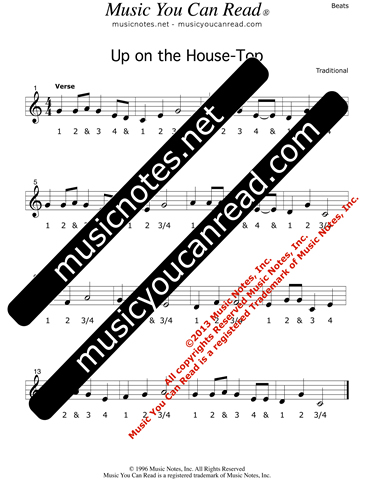
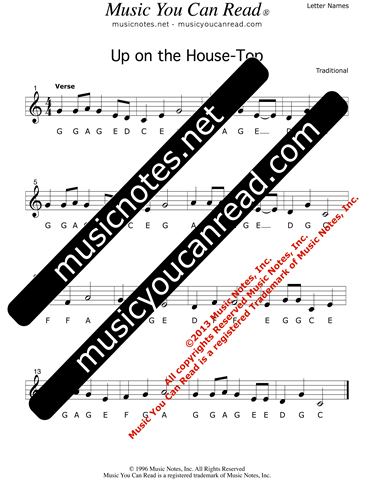
Up on the House-Top

"Up On the House-Top" Lyrics, Text Format


Descending variations of La\So\Me\Re,
changing the rhythm to match the lyrics.


Description

  • Grade: Second
  • Origin: USA – Traditional
  • Key: C Major
  • Time: 4/4
  • Form: AB – verse/chorus
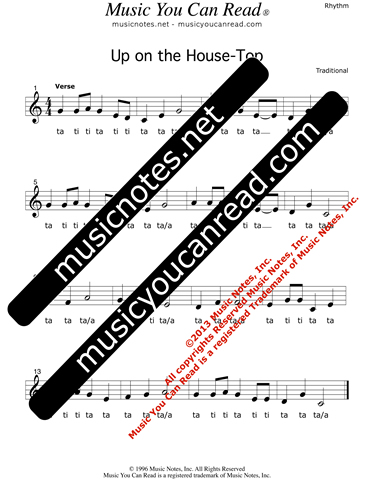
  • Rhythm: intermediate: | ta ti ti ta ti ti |
    | ta ta ta/a | ta ta ta ti ti | ta ti ti ti ti ta |
    | ta ti ti ta/a | ta ti ti ta ta |
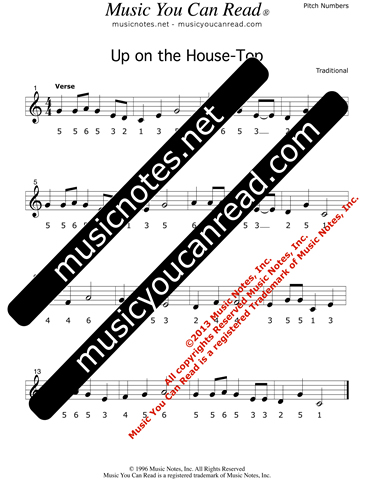
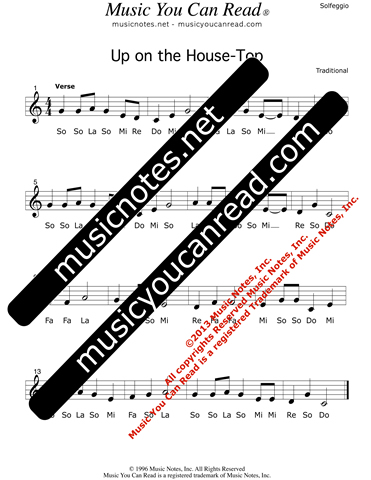
  • Pitches: intermediate: Do Re Mi Fa So La
  • Intervals: intermediate: So\Mi, Do/Mi/So ascending tonic arpeggio, Re/So, So\Do, Do/Fa, Fa/La, Re/Fa
  • Musical Elements: notes: half, quarter, eighth; tied notes, verse/chorus, changing rhythms to match verse lyrics
  • Key Words: Christmas, Santa Clause, seasonal, reindeer, pause, jumps, through, chimney, joys, Saint Nick, stocking, dolly, laughs, cries, shut, glorious, hammer, tacks, whistle, whip, cracks; contraction: wouldn’t (would not); possessive: ones’

“Up on the House-Top” 

1. Up on the house-top the reindeer pause,
Out jumps good old Santa Clause;
Down through the chimney with lots of toys,
All for the little ones’ Christmas joys.
Chorus
Ho, ho, ho! who wouldn’t go!
Up on the house-top, click, click, click,
Down through the chimney with good Saint Nick.
2.
First comes the stocking of little Neil,
Oh dear Santa, fill it well;
Give her a dolly that laughs and cries,
One that will open and shut her eyes.
Chorus
3. Look in the stocking of little Bill,
Oh, just see what a glorious fill!
Here is a hammer and lots of tacks,
Whistle and a ball and a whip that cracks!
Chorus
Additional Formats (click to enlarge)
music
"Up On the House-Top" Music Format
beats
Click to enlarge: "Up On the House-Top" Beats Format
rhythm
Click to Enlarge: "Up On the House-Top" Rhythm Format
pitch numbers
Click to Enlarge: "Up On the House-Top" Pitch Number Format
solfeggio
Click to Enlarge: "Up On the House-Top" Solfeggio Format
letter names
Click to Enlarge: "Up On the House-Top" Letter Names Format

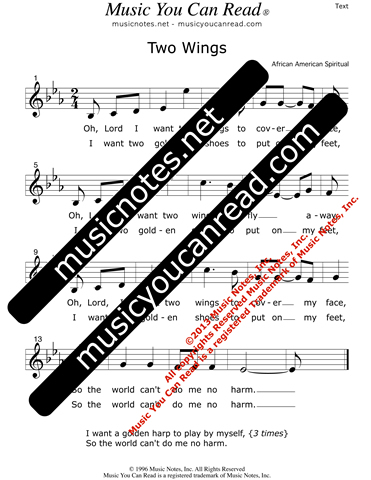
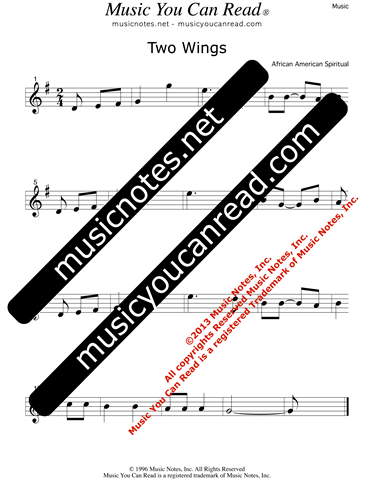
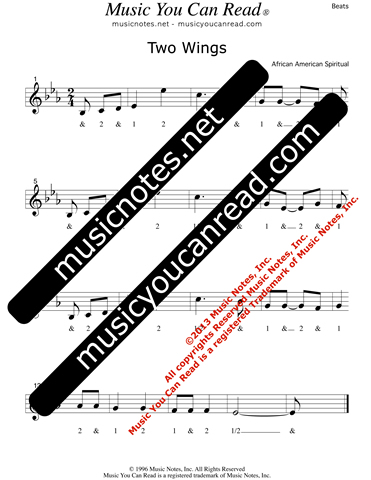
Two Wings

"Two Wings," Lyrics, Text Format


Syncopation for beginners, extended range, an octave skip
and an interval of a minor sixth, Mi\So.


Description

  • Grade: Fourth
  • Origin: USA – African American Spiritual
  • Key: E flat Major
  • Time: 2/4
  • Form: AaAB
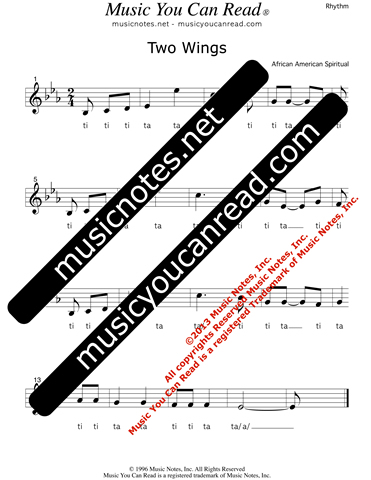
  • Rhythm: beginners: | ta ta | ta/ ti | syncopation,
    | ti ta ti | syncopation, | ta ti ti | ti ti ti ti | ta/a |
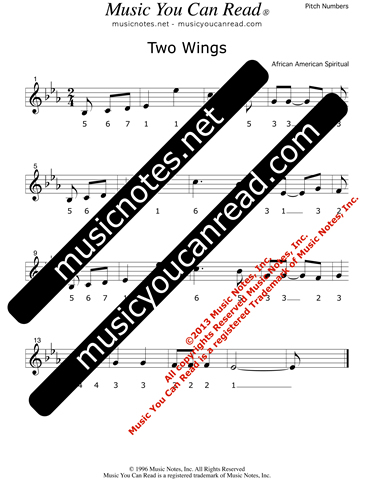
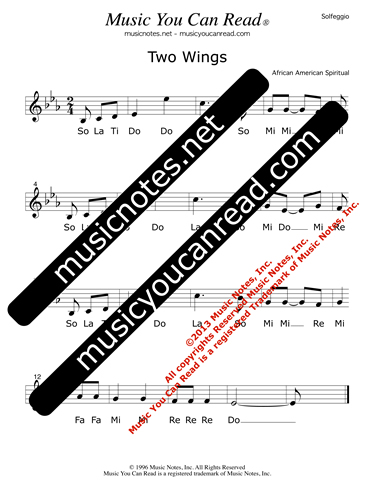
  • Pitches: intermediate: So La Ti Do Re Mi Fa So La Do – extended range
  • Intervals: intermediate: Do/Do ascending tonic (I) octave skip, Do\La (m3), So\Mi (m3), Mi\So(m6), Re\So (P5)
  • Musical Elements: notes: half, dotted quarter, quarter, eighth; pickup beats, tied notes, vocal slur
  • Key Words: USA history, African American History, sacred, Lord, angel wings, world, cover, face, harm, golden shoes, feet, golden harp, harp, myself; contraction: can’t (cannot)

“Two Wings” 

1. Oh, Lord I want two wings to cover my face,
Oh, Lord I want two wings to fly away,
Oh, Lord I want two wings to cover my face,
So the world can’t do me no harm.
2.
I want two golden shoes to put on my feet,
So the world can’t do me no harm.
3. I want a golden harp to play by myself,
I want a golden harp to play by myself,

So the world can’t do me no harm.
Additional Formats (click to enlarge)
music
"Two Wings," Music Format
beats
Click to enlarge: "Two Wings," Beats Format
rhythm
Click to Enlarge: "Two Wings," Rhythm Format
pitch numbers
Click to Enlarge: "Two Wings," Pitch Number Format
solfeggio
Click to Enlarge: "Two Wings," Solfeggio Format
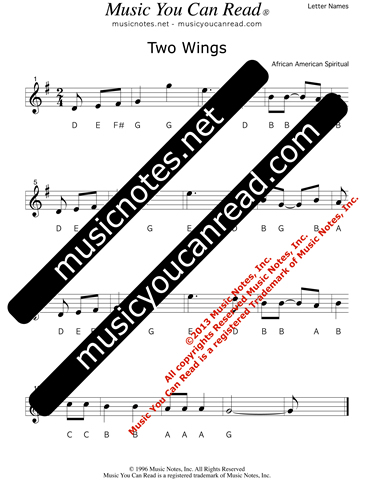
letter names
Click to Enlarge: "" Letter Names Format

Two, Four, Six, Eight

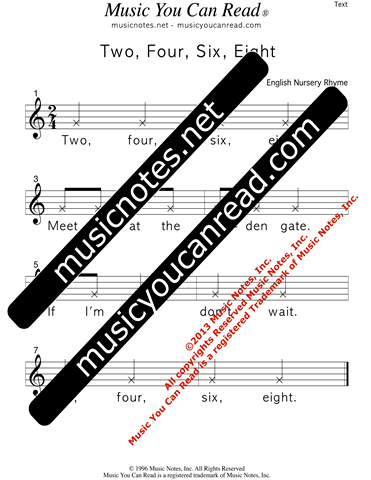
"Two, Four, Six, Eight" Lyrics, Text Format

Excellent beginning chant before reading rhythms on the staff!


Description

  • Grade: Kindergarten
  • Origin: England – Nursery Rhyme
  • Key: D Major
  • Time: 2/4
  • Form: ABCA
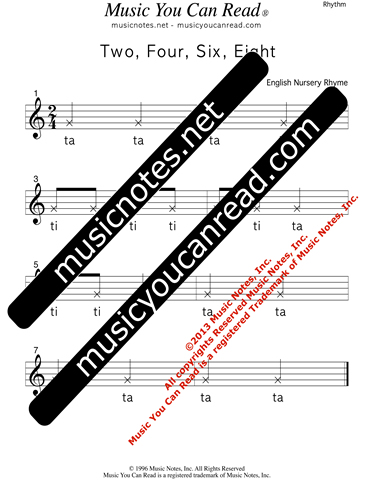
  • Rhythm: beginners: | ta ta | ti ti ti ti | ti ti ta | – percussion notes
  • Pitches: none
  • Intervals: none
  • Musical Elements: rhythmic beats in quarters and eights, chanting rhythms, percussion quarter notes
  • Key Words: world geography: England; counting by two’s, garden, gate, two, four, six, eight, wait, contraction: don’t (do not)


“Two, Four, Six, Eight”


Two, four, six eight,
Meet me at the garden gate.
If I’m late, don’t wait.
Two, four, six, eight.


Additional Formats (click to enlarge)
music
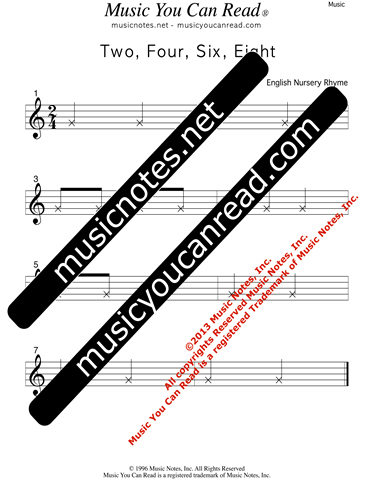
"Two, Four, Six, Eight" Music Format
beats
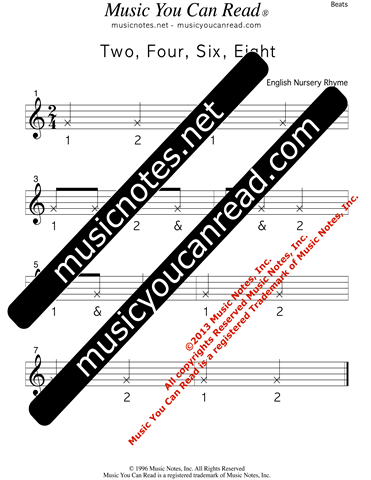
Click to enlarge: "Two, Four, Six, Eight" Beats Format
rhythm
Click to Enlarge: "Two, Four, Six, Eight" Rhythm Format
pitch numbers
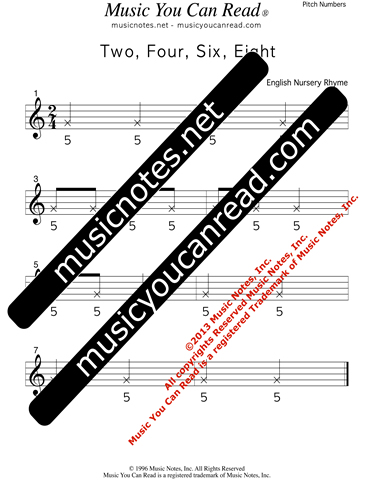
Click to Enlarge: "Two, Four, Six, Eight" Pitch Number Format
solfeggio
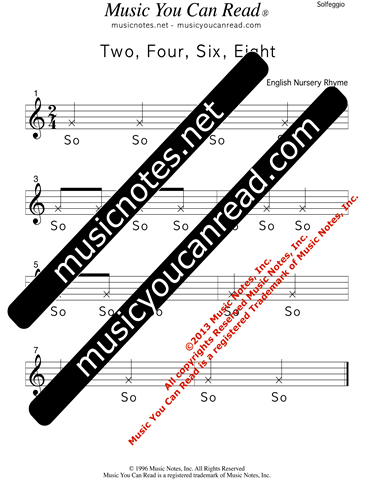
Click to Enlarge: "Two, Four, Six, Eight" Solfeggio Format
letter names
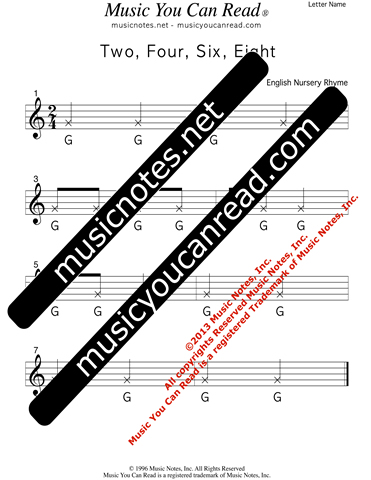
Click to Enlarge: "Two, Four, Six, Eight" Letter Names Format

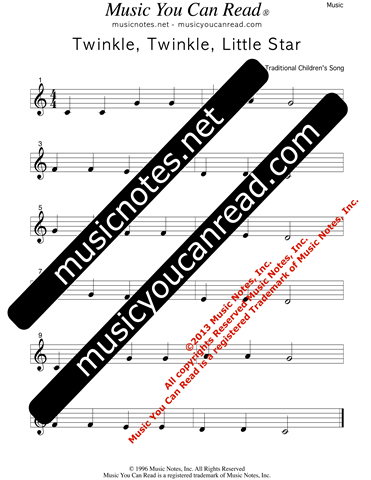
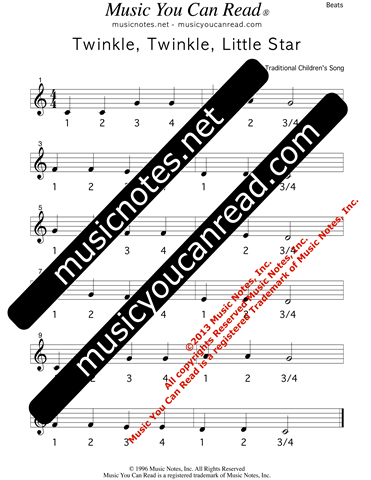
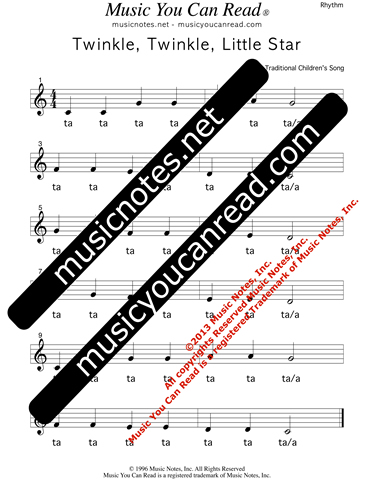
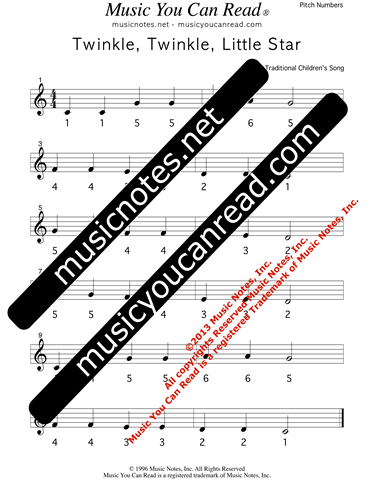
Twinkle, Twinkle, Little Star

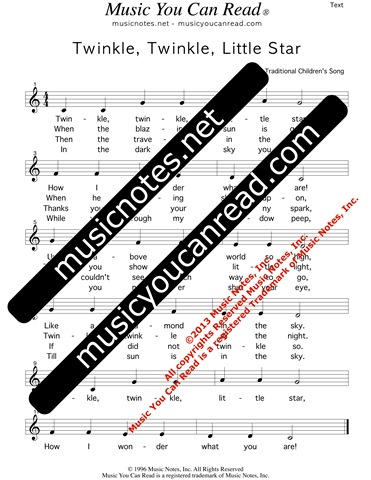
"Twinkle, Twinkle, Little Star" Lyrics, Text Format

Introducing the ascending perfect fifth, Do/So (P5).
Same melody as “Alphabet Song” and “Baa, Baa, B lack Sheep.”


Description

  • Grade: Kindergarten 
  • Origin: England/France – Lullaby*
  • Key: C Major
  • Time: 4/4
  • Form: ABCCAB
  • Rhythm: beginners: | ta ta ta ta | ta ta ta/a |
  • Pitches: intermediate: Do Re Mi Fa So La
  • Intervals: beginners: Do/So
  • Musical Elements: notes: half, quarter; ending a phrase on the second (Re), stepping down from the sixth to the tonic (La-Do)
  • Key Words: world geography: England, France; lullaby, stars, sky, twinkle, wonder, blazing, sun, shines, traveler, tiny, wonder, spark, dark, blue, curtains, peep, shut, eye, sun

*First published in 1806 as the poem “The Star.” The tune is from a french melody “Ah! vous diral-je, Maman,” later arranged by W. A. Mozart in a set of variations for piano; K 265/300e.

“Twinkle, Twinkle, Little Star”

1.Twinkle, twinkle, little star,
How I wonder what you are.
Up above the world so high,
Like a diamond in the sky.
Twinkle, twinkle, little star,
How I wonder what you are.

2.

When the blazing sun is gone,
When he nothing shines upon,
Then you show your little light,
Twinkle, twinkle, all the night.
Twinkle, twinkle, little star,
How I wonder what you are.

3.

Then the traveler in the dark,
Thanks you for your tiny spark,
He could not see which way to go,
If you did not twinkle so.
Twinkle, twinkle, little star,
How I wonder what you are.

4.In the dark blue sky you keep,
And often through my curtains peep,
For you never shut your eye,
Till the sun is in the sky.
Twinkle, twinkle, little star,
How I wonder what you are.

Additional Formats (click to enlarge)
music
"Twinkle, Twinkle, Little Star" Music Format
beats
Click to enlarge: "Twinkle, Twinkle, Little Star" Beats Format
rhythm
Click to Enlarge: "Twinkle, Twinkle, Little Star" Rhythm Format
pitch numbers
Click to Enlarge: "Twinkle, Twinkle, Little Star" Pitch Number Format
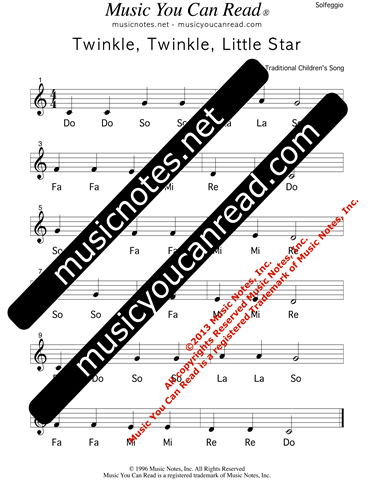
solfeggio
Click to Enlarge: "Twinkle, Twinkle, Little Star" Solfeggio Format
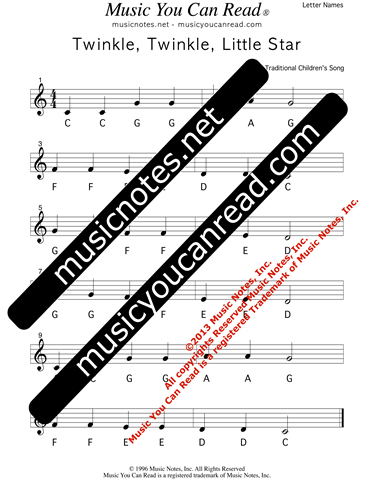
letter names
Click to Enlarge: "Twinkle, Twinkle, Little Star" Letter Names Format