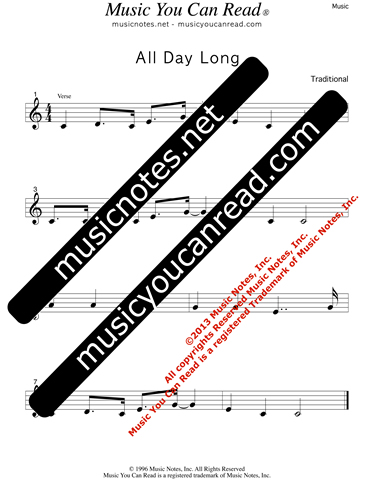
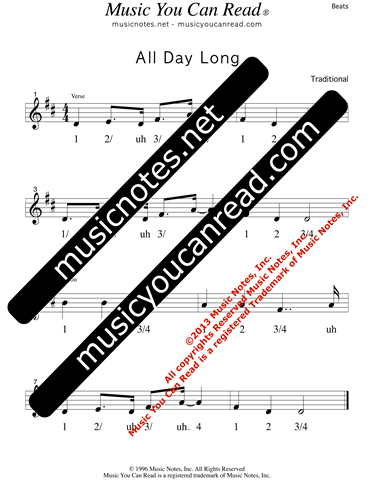
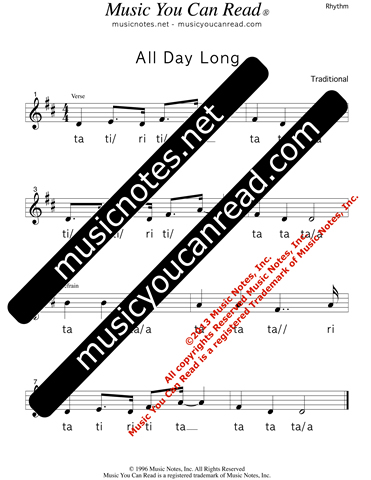
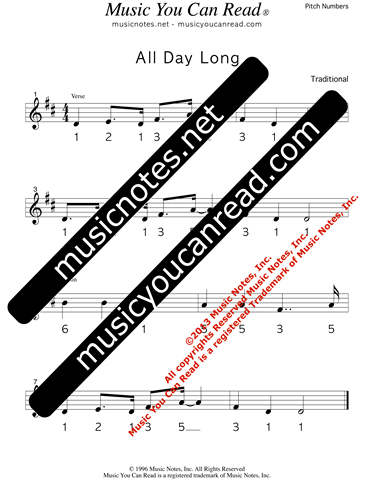
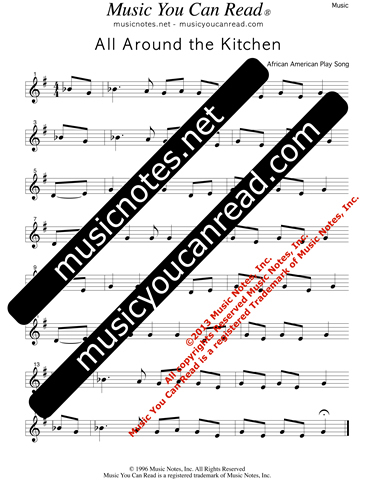
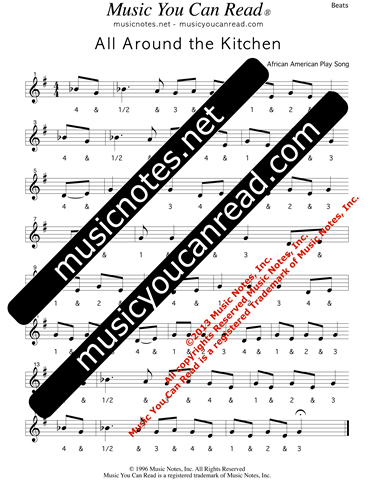
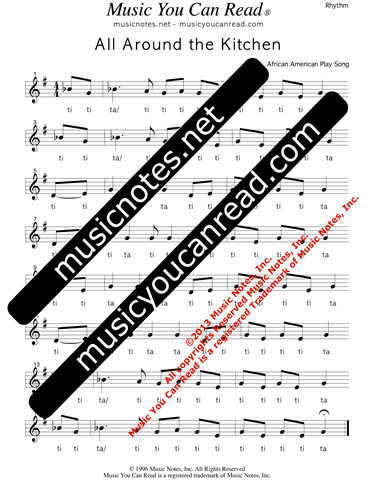
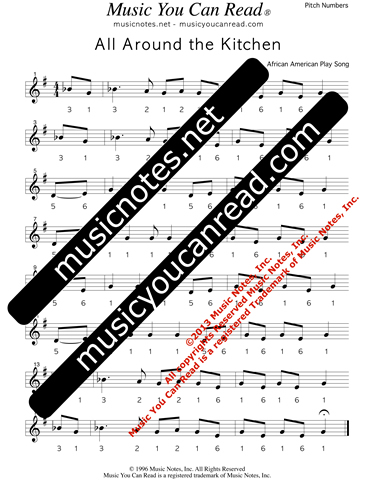
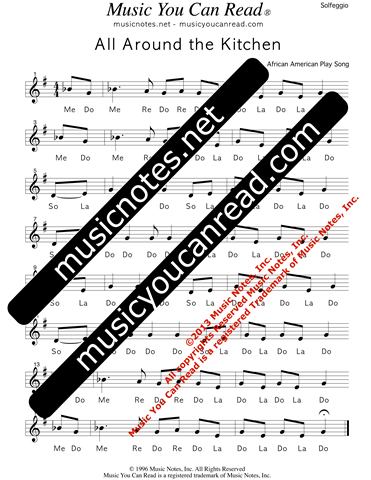
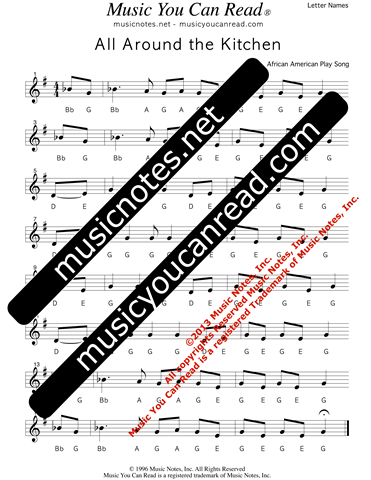
Advanced syncopation and a rare double dotted quarter note while practicing ascending and descending tonic arpeggios.
Description
Grade: Second
Origin: USA – Traditional
Key: D Major
Time: 4/4
Form: staves: AaBA – song: AB verse/refrain
Rhythm: advanced: | ta ti/ ri ti/ ri ta/ | syncopation, | ta ta ta/a | ti/ ri ti/ ri ti/ ta | syncopation, | ta ta ta// ri | syncopation (double dotted quarter note)
Key Words: rooster, rooster crow, cock-a-doodle, rooster walk, rooster scratching, movement to music, hips, shoulders, knees, head
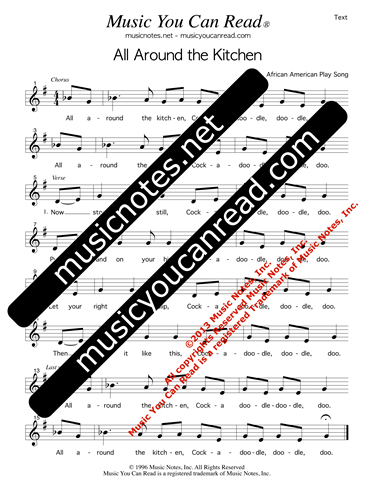
“All Around the Kitchen”
Chorus
All around the kitchen,
Cock-a-doodle, doodle, doo,
All around the kitchen,
Cock-a-doodle, doodle, doo.
Now stop right still,
Cock-a-doodle, doodle, doo.
And put your hands on your hips,
Cock-a-doodle, doodle, doo.
And let your right foot slip,
Cock-a-doodle, doodle, doo.
Then do it like this,
Cock-a-doodle, doodle, doo.
Chorus
2.Now stop right still,
Cock-a-doodle, doodle, doo.
And put your hands on your head,
Cock-a-doodle, doodle, doo.
And let your right foot slip,
Cock-a-doodle, doodle, doo.
Then do it like this,
Cock-a-doodle, doodle, doo.
Chorus
3.Now stop right still,
Cock-a-doodle, doodle, doo.
And put your hands on your knees,
Cock-a-doodle, doodle, doo.
And let your right foot slip,
Cock-a-doodle, doodle, doo.
Then do it like this,
Cock-a-doodle, doodle, doo.
Chorus
4.Now stop right still,
Cock-a-doodle, doodle, doo.
And put your hands on your shoulders,
Cock-a-doodle, doodle, doo.
And let your right foot slip,
Cock-a-doodle, doodle, doo.
Then do it like this,
Cock-a-doodle, doodle, doo.
Key Words: North American history, Basque, New Mexico, multi-cultural, lullaby, sacred, Spanish, zapatos (shoes), angelitos (angels), niño (baby), madres (mother), cielo (heaven), asiste (pray), duermete (slumber); hyphenated: bare-footed
ñ – The Spanish “ñ” is pronounced like the “ny” in the word “canyon.”
Collected from the Basque people in New Mexico, cir. 1932 – Sail Away, Locke
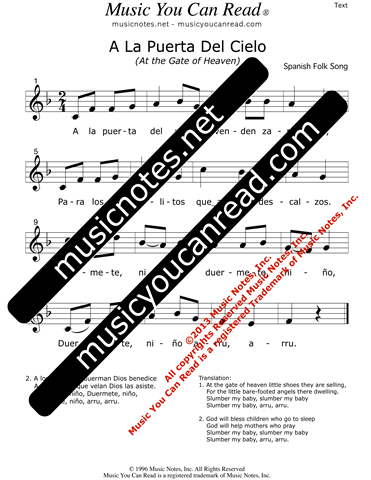
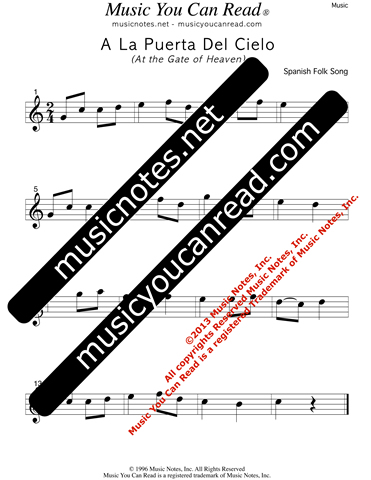
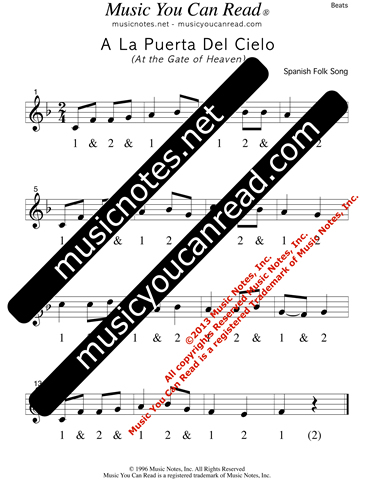
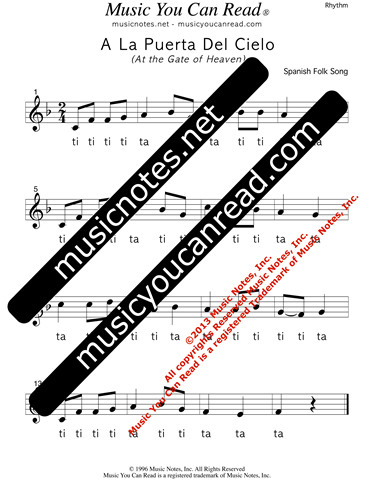
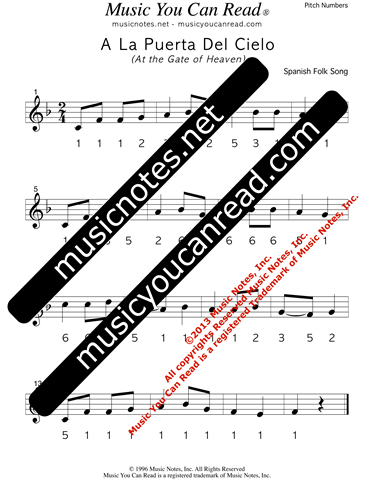
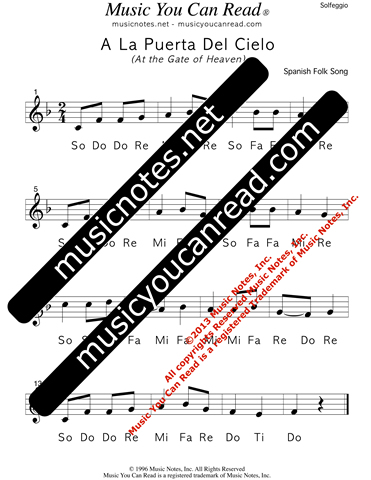
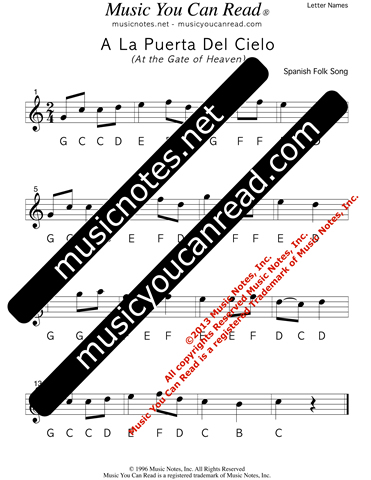
“A La Puerta Del Cielo” (At the Gate of Heaven)
1.
A la puerta del cielo venden zapatos,
Para los angelitos que andan descalzos.
Duermete, niño, Duermete, niño,
Duermete, niño, arru, arru.
2.
A los niños que duerman Dios benedice
A las madres que velan Dios las asiste.
Duermete, niño, Duermete, niño,
Duermete, niño, arru, arru.
Translation:
1.
At the gate of heaven little shoes they are selling,
For the little bare-footed angels there dwelling.
Slumber my baby, slumber my baby
Slumber my baby, arru, arru.
2.
God will bless children who go to sleep
God will help mothers who pray
Slumber my baby, slumber my baby
Slumber my baby, arru, arru.
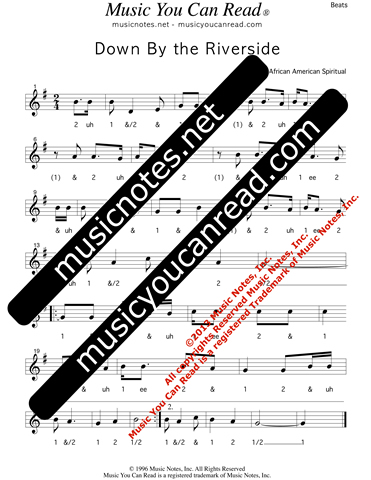
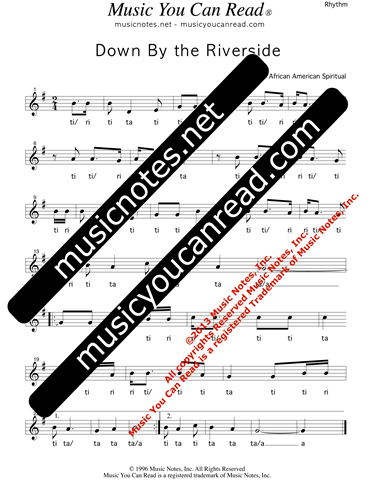
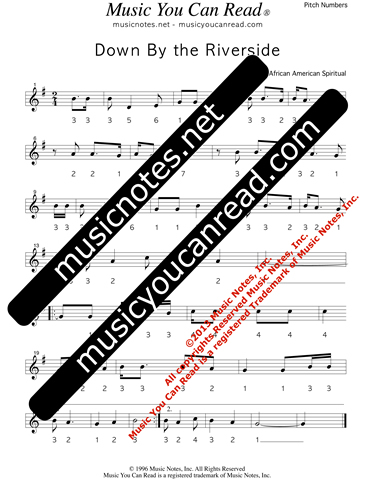
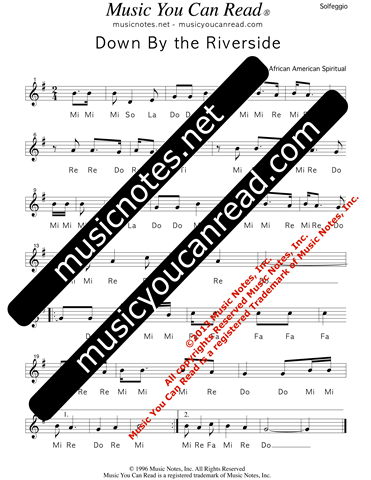
Advanced syncopation, repeated melodic patterns, an augmented fourth (A4), and practicing the descending major sixth (M6) Mi\So.
Description
Grade: Fifth
Origin: USA – African American Spiritual, circa. 1819
Key: G Major
Time: 2/4
Form: AB – verse/refrain
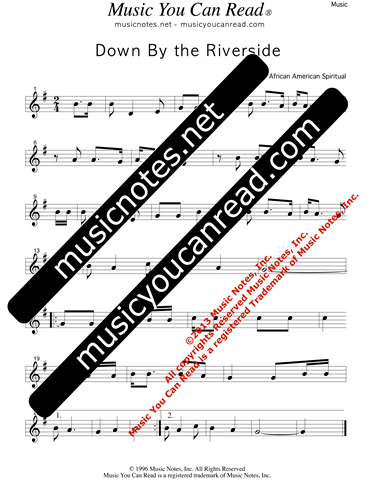
Rhythm: advanced: | ti ta ti | syncopation,
| ti ti ta | (ti) ti ti/ ri | syncopation, | ri ti/ ta | syncopation , | ri ti/ ti ti ri | syncopation, | ta ta | ta/a_|_/ ti ti ti ri | syncopation, | ri ti/ ti ti | syncopation, | ta ti ti ri | syncopation, | ti ta/ | syncopation
Musical Elements: notes: half, dotted quarter, quarter, dotted eighth, eighth, sixteenth; rest: eighth; pickup beat, ties, vocal slur, repeat sign, first and second endings, verse/refrain, syncopation, arpeggio (vi, Em), repeated melodic rhythm patterns: eight rest on first beat
Key Words: USA history, African American History, sacred, spiritual, sword, shield, study war, golden sand, long white rob, starry crown, golden shoes, Prince of Peace, shake hands, around the world; contraction: gonna (going to), ain’t (am not)
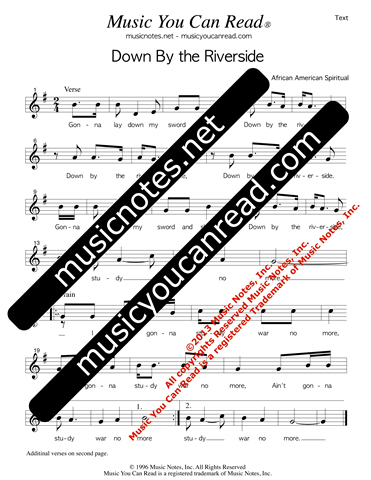
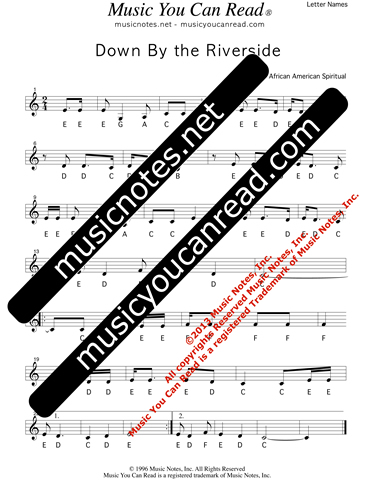
“Down By the Riverside” also known as “Ain’t Gonna Study War No More”
1.
Gonna lay down my sword and shield,
Down by the riverside,
Down by the riverside,
Down by the riverside.
Gonna lay down my sword and shield,
Gonna study war no more.
Refrain:
I ain’t gonna study war no more,
Ain’t gonna study war no more,
Ain’t gonna study war no more;I ain’t gonna study war no more,
Ain’t gonna study war no more,
Ain’t gonna study war no more.
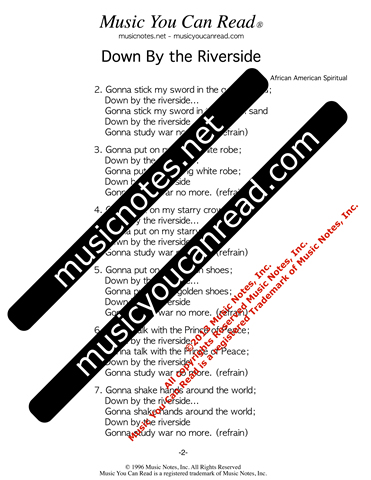
2.
Gonna stick my sword in the golden sand;
Down by the riverside,
Down by the riverside,
Down by the riverside.
Gonna stick my sword in the golden sand
Down by the riverside
Gonna study war no more.
Refrain
3.
Gonna put on my long white robe;
Down by the riverside,
Down by the riverside,
Down by the riverside.
Gonna put on my long white robe;
Down by the riverside
Gonna study war no more.
Refrain
4.
Gonna put on my starry crown;
Down by the riverside,
Down by the riverside,
Down by the riverside.
Gonna put on my starry crown;
Down by the riverside
Gonna study war no more.
Refrain
5.
Gonna put on my golden shoes;
Down by the riverside,
Down by the riverside,
Down by the riverside.
Gonna put on my golden shoes;
Down by the riverside
Gonna study war no more.
Refrain
6.
Gonna talk with the Prince of Peace;
Down by the riverside,
Down by the riverside,
Down by the riverside.
Gonna talk with the Prince of Peace;
Down by the riverside
Gonna study war no more.
Refrain
7.
Gonna shake hands around the world;
Down by the riverside,
Down by the riverside,
Down by the riverside.
Gonna shake hands around the world;
Down by the riverside
Gonna study war no more.
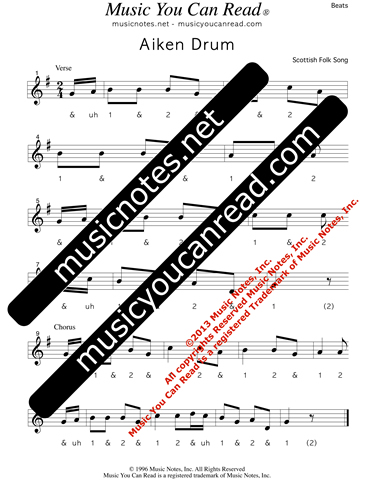
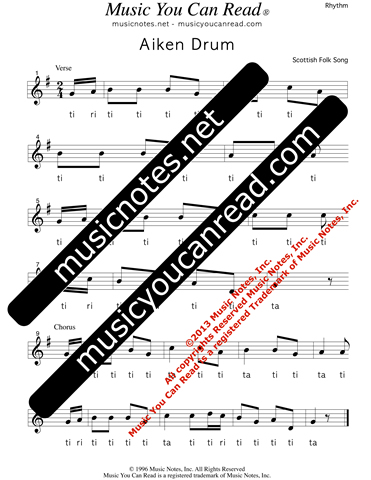
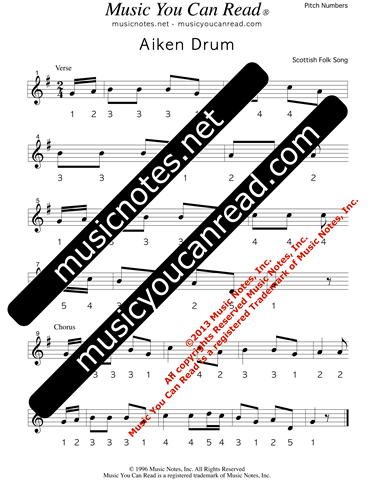
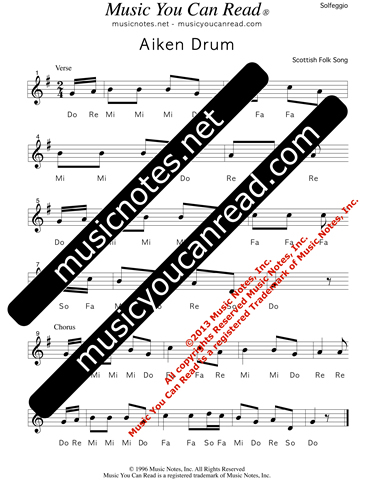
Key Words: world geography, Scotland, United Kingdom, Jacobite Rising, Battle of Sheriffmuir, nonsense song, moon, ladie (ladle/spoon), cream cheese, hat, coat, roast beef, button, penny leaves, breeches (pants), haggis bags (bags made from sheep organs)
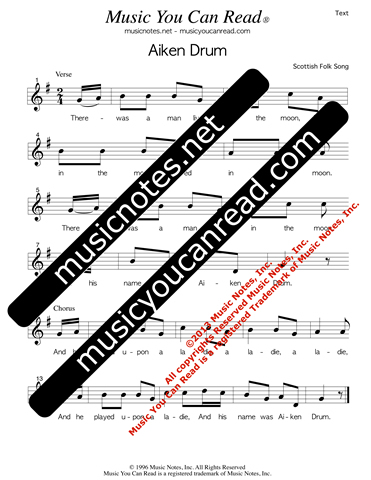
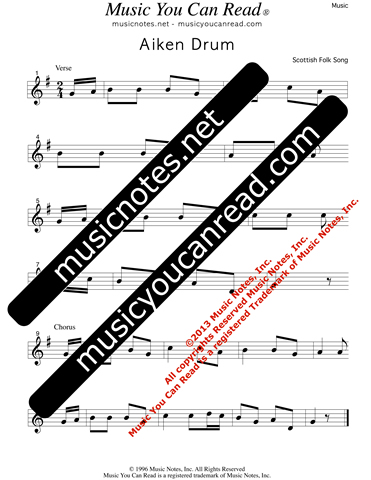
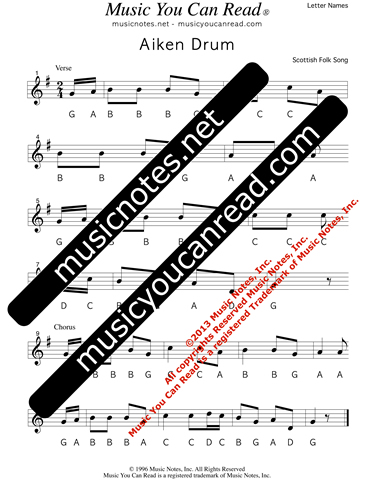
“Aiken Drum”
1.
There was a man lived in the moon,
lived in the moon, lived in the moon,
There was a man lived in the moon,
And his name was Aiken Drum.
Chorus
And he played upon a ladie,
a ladie, a ladie,
And he played upon a ladie,
And his name was Aiken Drum.
2.
And his hat was made of good cream cheese,
good cream cheese, good cream cheese,
And his hat was made of good cream cheese,
And his name was Aiken Drum.
Chorus
3.
And his coat was made of good roast beef,
good roast beef, good roast beef,
And his coat was made of good roast beef,
And his name was Aiken Drum.
Chorus
4.
And his buttons made of penny loaves,
of penny loaves, of penny loaves,
And his buttons made of penny loaves,
And his name was Aiken Drum.
Chorus
5.
And his breeches made of haggis bags,
of haggis bags, of haggis bags,
And his breeches made of haggis bags,
And his name was Aiken Drum.
The rhyme dates from 1715 during the Jacobite Rising. Aiken Drum is a kindhearted mythical creature (brownie/fairy) who was sometimes mischievous.
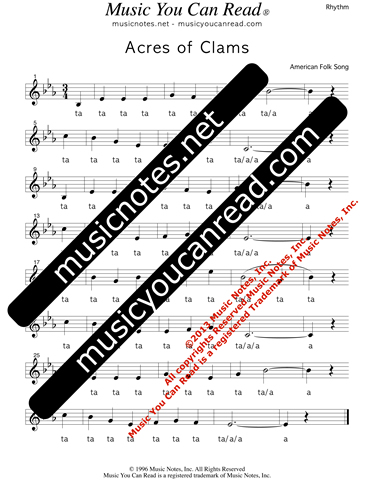
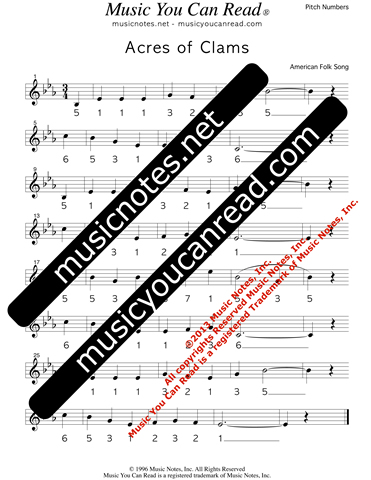
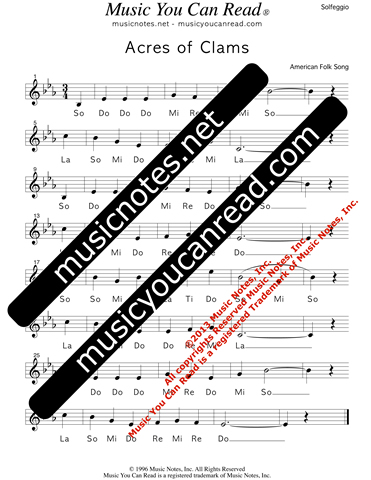
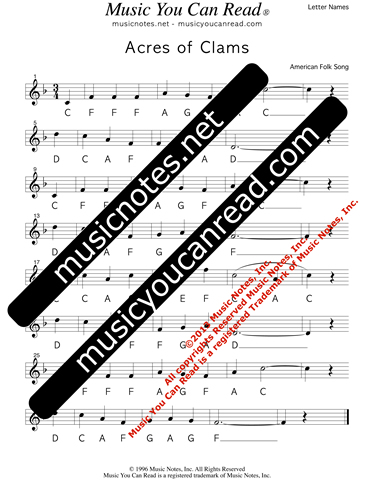
Contrasting a vocal slur with tied notes, extending the vocal range with ascending and descending tonic arpeggios. Carrying over through the mid-phrase rest will strengthen breath control.
Description
Grade: Third
Origin: USA – Folk Song, attributed to Francis D. Henry cir. 1874
Key: E flat Major
Time: 3/4
Form: AaBa – eight measure phrases
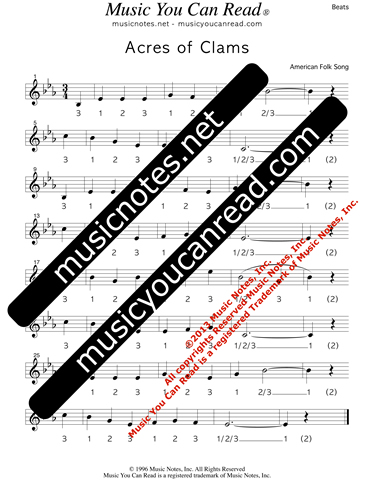
Rhythm: beginners: | ta ta ta | ta ta/a |
| ta (ta) ta | ta/a/a |
Same tune as “Old Rosin the Beau” cir. 1830’s, and “Lay of the Old Settler.”
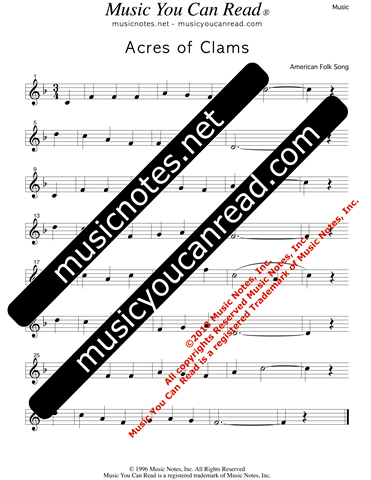
“Acres of Clams”
1.
I’ve wandered all over this country,
Prospecting and digging for gold;
I’ve tunneled, hydraulic’d, and cradled,
This story I’ve frequently told,
This story I’ve frequently told,
This story I’ve frequently told;
I’ve tunneled, hydraulic’d, and cradled,
This story I’ve frequently told.
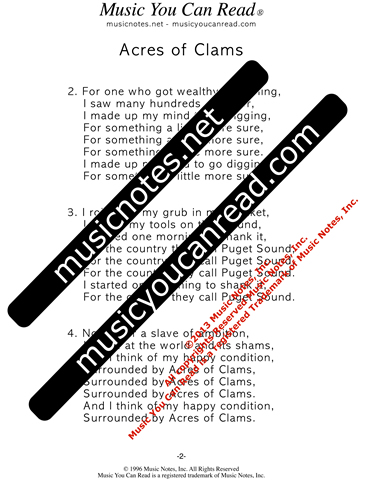
2.
For one who got wealthy by mining,
I saw many hundreds get poor,
I made up my mind to go digging,
For something a little more sure,
For something a little more sure,
For something a little more sure;
I made up my mind to go digging,
For something a little more sure.
3.
I rolled up my grub in my blanket,
I left all my tools on the ground,
I started one morning to shank it,
For the country they call Puget Sound,
For the country they call Puget Sound,
For the country they call Puget Sound;
I started one morning to shank it,
For the country they call Puget Sound.
4.
No longer a slave of ambition,
I laugh at the world and its shams,
And I think of my happy condition,
Surrounded by Acres of Clams,
Surrounded by Acres of Clams,
Surrounded by Acres of Clams;
And I think of my happy condition,
Surrounded by Acres of Clams.
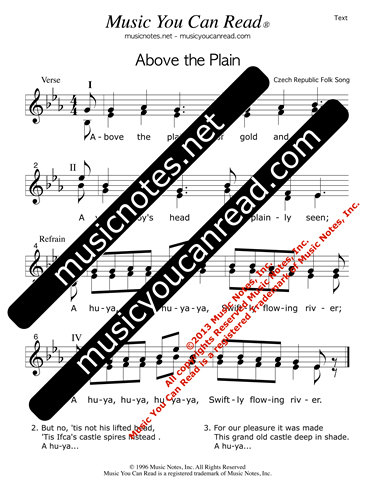
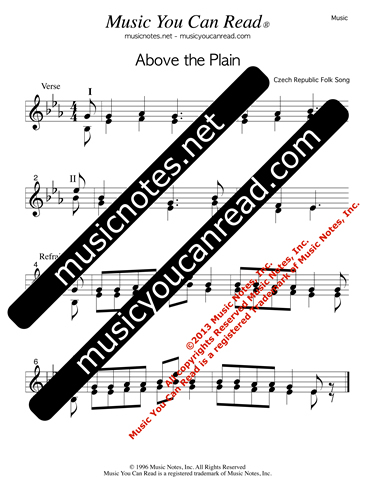
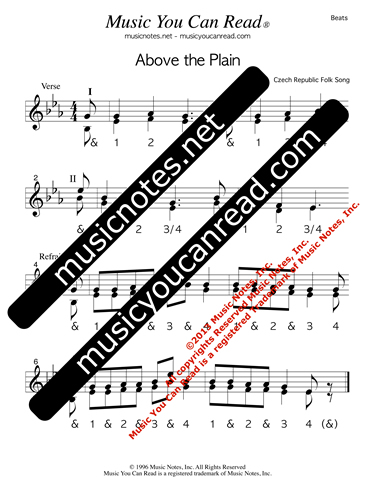
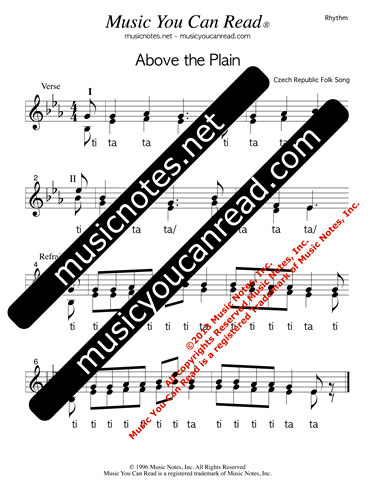
Contrasting straight and dotted syncopation, expanding the vocal range while singing a four part round in two parts, and practicing the intervals of the tonic chord/arpeggio in voice and on xylophones.
Description
Grade: Fourth
Origin: Czech Republic – Folk Song
Key: E flat Major
Time: 4/4
Form: rhythm: AABB – phrases/song: AB
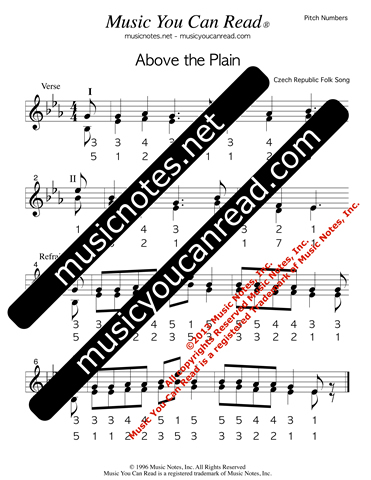
Rhythm: beginners: | ta ta ta/ ti | dotted syncopation, | ti ti ti ti ti ti ta | straight syncopation
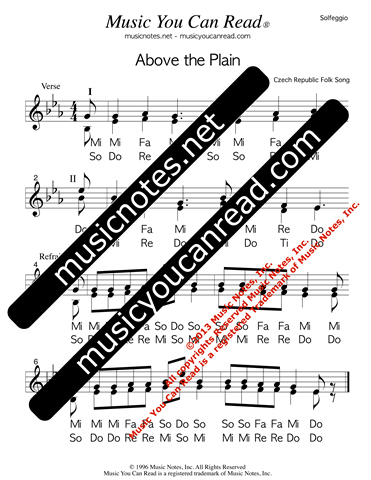
Pitches: intermediate: So Do Re Mi Fa So Do
Intervals: intermediate: So/Do, Mi\Do, So8/Do8\So8, Mi/So\Mi, Do\So, Mi/Do8, Mi/So8, So8\Mi- all intervals of the tonic chord/arpeggio, E flat Major (Bb-Eb-G-Bb-Eb), or I (one)
Musical Elements: notes: dotted quarter, quarter, eighth; pickup beat, four part round in two parts, singing in parts, reading two parts, verse/refrain, recognizing the intervals associated with the I chord
Key Words: world geography: Czech Republic (formerly Czechoslovakia – now the Czech Republic and Slovak Republic), plain, gold, green, young, plainly, swiftly, flowing, river, lifted, head, spires, instead, pleasure, grand, castle, deep, shade
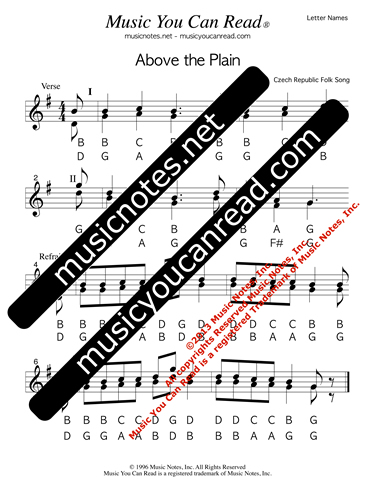
Xylophones: intermediate: Letter Names Format is presented in G Major; practicing tonic chord intervals
The orginal melody, taught in the 4th grade: “Ifca’s Castle” is divided between the two parts.
“Above the Plain”
1.
Above the plain of gold and green,
A young boy’s head is plainly seen;
Refrain
A huya, huya, huyaya,
Swiftly flowing river;
A huya, huya, huyaya,
Swiftly flowing river.
2.
But no, ’tis not his lifted head,
‘Tis Ifca’s castle spires instead.
Refrain
3.
For our pleasure it was made
This grand old castle deep in shade.
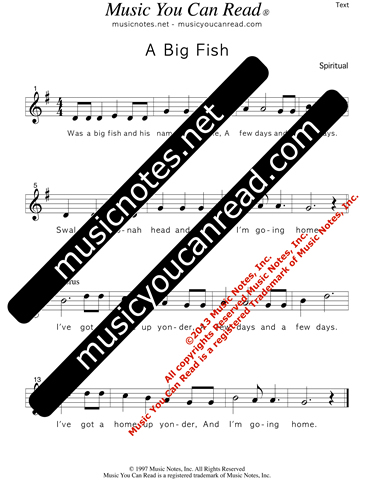
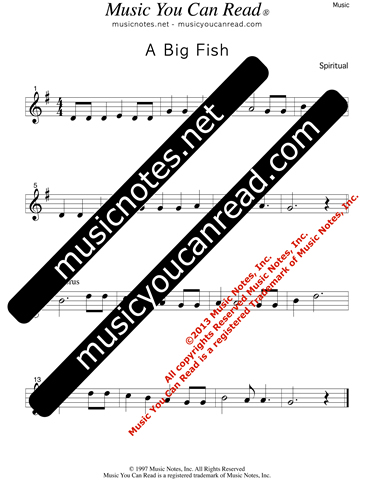
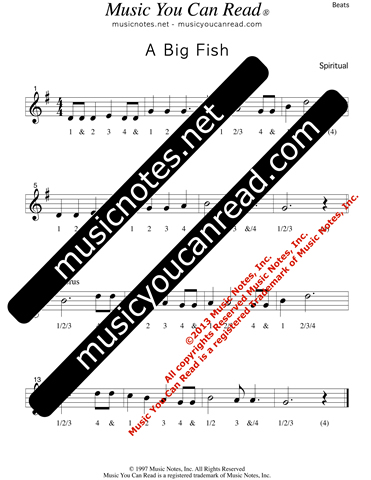
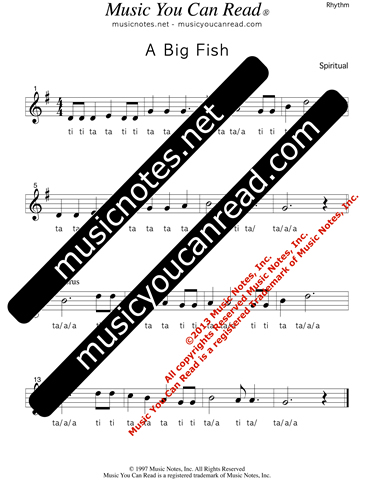
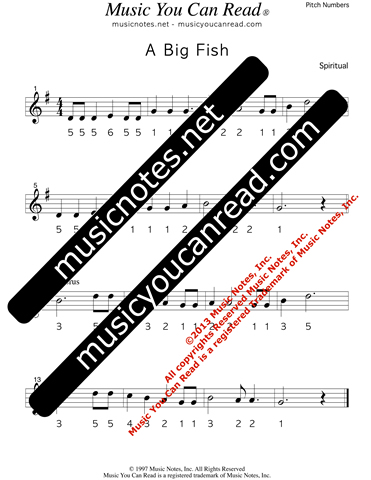
Syncopation, dotted rhythms, and noting the difference
the 4th (Fa) makes when sung in the chorus.
Description
Grade: Second
Origin: USA – Spiritual
Key: G Major
Time: 4/4
Form: ABCD
Rhythm: intermediate: | ti ti ta ta ti ti |
| ti ti ta ta ti ti | ta ta ta/ ti | ta/a ti ta/ |
| ta/a/a (ta)| ta ta/a/a | ta/a/a ti ti | ta ta/a/a |
| ta ta ta ti ti |